galton.org 225
Composite Portraiture
225
their components is shown by six of the specimens. I wished to learn whether the order
in which the components were photographed made any material difference in the result, so
I had three of the portraits arranged successively in each of their six possible
combinations. It will be observed that four at least of the six composites are closely alike. I
should say that in each of this set (which was made by the wet process) the last of the three
components was always allowed a longer exposure
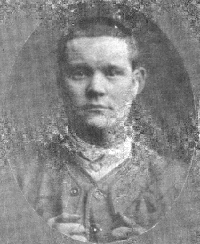
The accompanying woodcut is as fair a representation of one of the composites as is practicable
in ordinary printing. It was photographically transferred to the wood, and the engraver has used
his best endeavour to translate the shades into line engraving. This composite is made out of
only three components, and its threefold origin is to he traced in the ears, and in the buttons to
the vest. To the best of my judgment, the original photograph is a very exact average of its
components; not one feature in it appears identical with that of any one of them, hut it contains a
resemblance to all, and is not more like to one of them than to another. However, the judgment
of the wood engraver is different. His rendering of the composite has made it exactly like one of
its components, which it must he borne in mind he had never seen. It is just as though an artist
drawing a child had produced a portrait closely resembling its deceased father, having
overlooked an equally strong likeness to its deceased mother, which was apparent to its relatives.
This is to me a most striking proof that the composite is a true combination.
[Ed.: a proper reproduction of the photograph has been substituted for the woodcut]
than the second, and the second than the first, but it is found better to allow an equal time
to all of them.